


01
Show it clearly.
Use direct language, demonstrate the action and break a task into smaller steps. Check what she has understood before adding more detail.
INCLUSION & INDIVIDUAL SUPPORT
Different players learn in different ways. We listen to your daughter, understand what helps her and agree how to make her football coaching welcoming, clear and worthwhile.
Girls aged 5–18 · All abilities · Taunton & Wellington
START WITH THE PLAYER
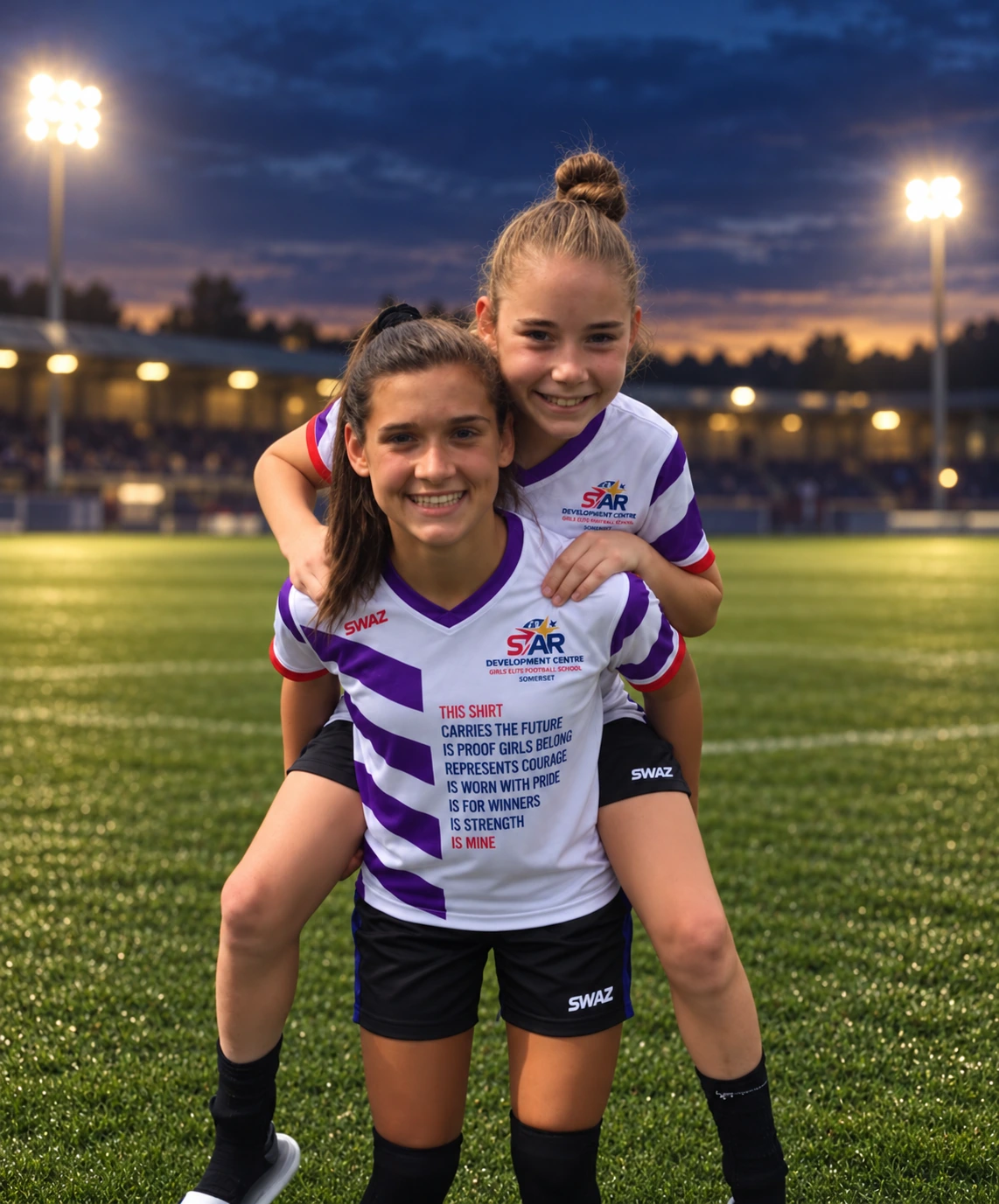
We’re proud of our history of supporting players with autism, ADHD and other neurodivergent conditions. Her individual experience, communication preferences and strengths guide the support we agree.
That could mean how she prefers an instruction, what helps her feel settled or how she lets someone know she needs a break. Her strengths, interests and football goals are part of that conversation too.
SMALL ADJUSTMENTS. A MORE USEFUL SESSION.
These are examples of how coaching can adapt. We discuss what is useful for her and agree the approach together.
Use direct language, demonstrate the action and break a task into smaller steps. Check what she has understood before adding more detail.
Allow time to take in an instruction and try it. Repeating more words straight away may not help; we can pause, show it again or explain it differently.
Explain what we are working on and what comes next. Where useful, talk through a change before moving to a new activity.
Discuss noise, distractions and the space around her. We agree what is practical for the venue and coaching format before the session.
Agree how she can ask for a pause, a drink or a moment to reset. A simple word or signal can help her tell us what she needs.
Adjust the pace, the amount of information or the difficulty of a task. Recognise her progress from her own starting point and keep the football meaningful.
WHAT MIGHT HELP?
Open an example to see the kind of conversation we can have. Your daughter may need a different combination of support.
“What would make this easier for you?”
We can start with one action, demonstrate it and give her time to try. Ask whether she prefers to watch, hear a short explanation or walk through the practice. We check understanding without putting her on the spot.
Tell us which parts of the environment she finds difficult and what usually helps. We can discuss the session structure, breaks and the space available. The venue and format matter, so arrangements are agreed with the family beforehand.
We explain what she is practising, give a manageable first challenge and recognise what she has tried. Feedback focuses on a clear next action. She has room to ask questions and settle without being compared with a more experienced player.
We can use shorter explanations, purposeful activity and changes in challenge to keep practice useful. We listen to her response and discuss breaks or a different pace. What helps one player may not help another.
HER STARTING POINT IS WELCOME
Inclusion also means making room for different levels of experience. She does not have to arrive already knowing the skills or the language of football.
We explain unfamiliar terms, demonstrate the skills and give her time on the ball. Challenges grow from what she can do and what she is ready to try.
If she has been away or lost confidence, tell us what happened and what she wants now. We can discuss a suitable pace and a first step that feels manageable.
More confidence with friends, one skill to improve or an ambitious football goal: we listen to what matters to her and review the direction as she develops.
BEFORE HER FIRST SESSION
You and your daughter can talk with STAR privately before registering. Start with what you know about her; we can work through the practical details together.
What does she enjoy? What helps her understand a task? Is there anything about a new setting that she finds difficult?
Discuss the programme, venue, introduction and useful adjustments. Confirm what to expect, where to meet and any parent arrangements.
Ask how it felt, notice what helped and tell us what needs changing. We keep the player involved as the coaching develops.
Contact STAR to arrange a conversation about a first session.
Yes. We coach girls of all abilities, including complete beginners. Tell us about her experience and confidence so we can discuss a suitable starting point and programme for her age.
No. You and your daughter can discuss support with STAR privately. We agree how to help her without asking her to share personal details in front of other players.
Yes. Call, email or message STAR to arrange a conversation. You can start with what helps her learn, what she enjoys and anything that makes a new session difficult.
Discuss this with STAR before her first session. We will confirm the venue, where to meet, whether you can stay and the best place to watch.
Tell us what felt comfortable and what was difficult. We listen to the player and family, review what helped and discuss changes to the pace, explanations, challenge or session arrangements.